Kitchen Tools
Yukihira Nabe, Explained: Why Japan's Everyday Saucepan Has Two Spouts
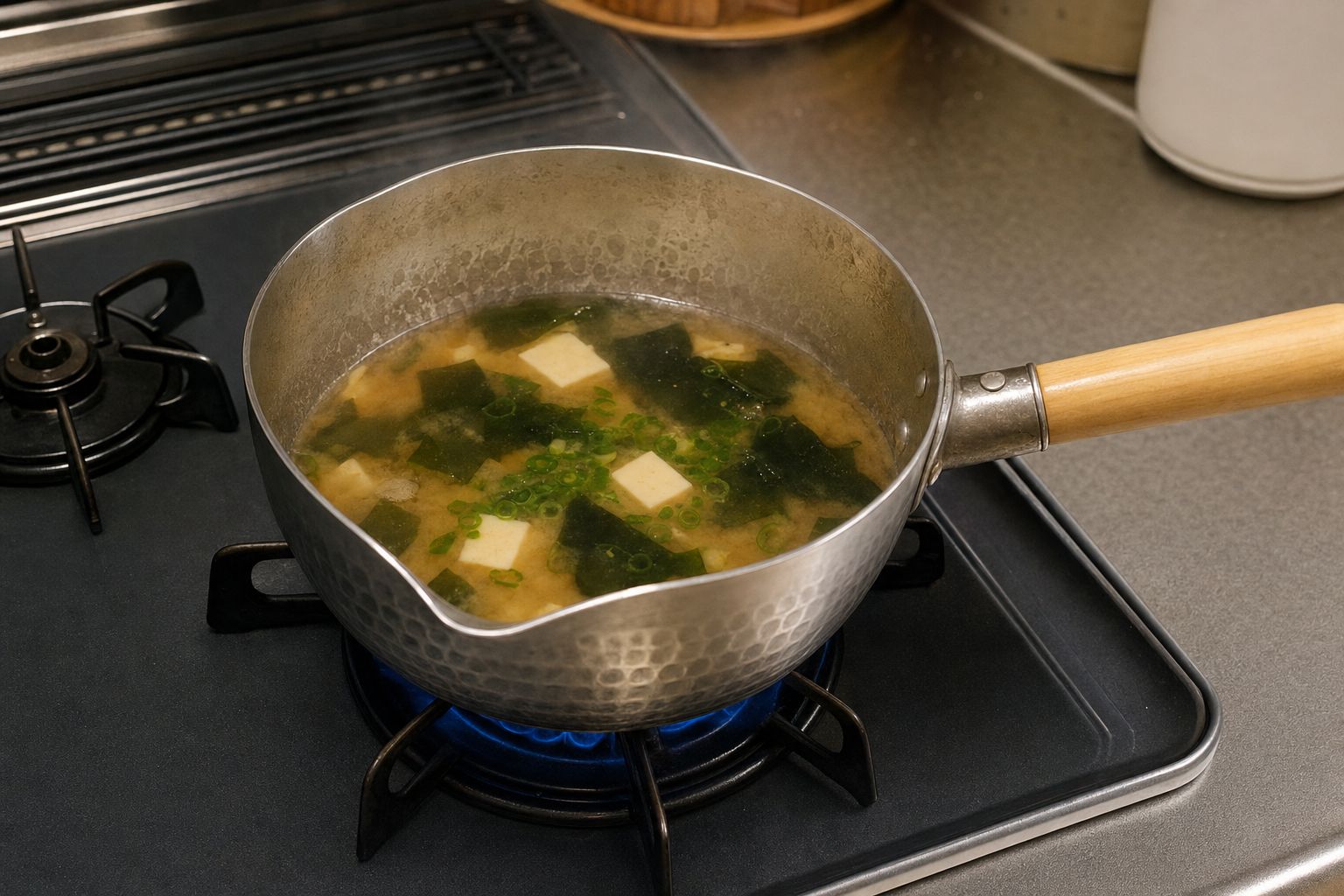
Pick up almost any small single-handled pot in a Japanese kitchen and check the rim across from the handle. There’s a notch cut into it — and if you look closer, it’s actually two notches, angled slightly apart like a shallow letter V.
That’s not a manufacturing quirk. It’s on purpose, and almost nobody outside Japan has a word for the pot it belongs to.
The short answer: this is a yukihira nabe (雪平鍋) — a lightweight, hand-hammered pot, usually aluminum, with one long handle and a double-spouted lip for pouring. It’s the pot Japanese households reach for dozens of times a week for miso soup, dashi, blanching, and reheating, and it’s cheap and unglamorous enough that almost nobody thinks to explain it. Below: what the hammering actually does, why there are two spouts instead of one, where the name comes from (there isn’t a settled answer), and what one of these should actually cost you.
What a yukihira actually is
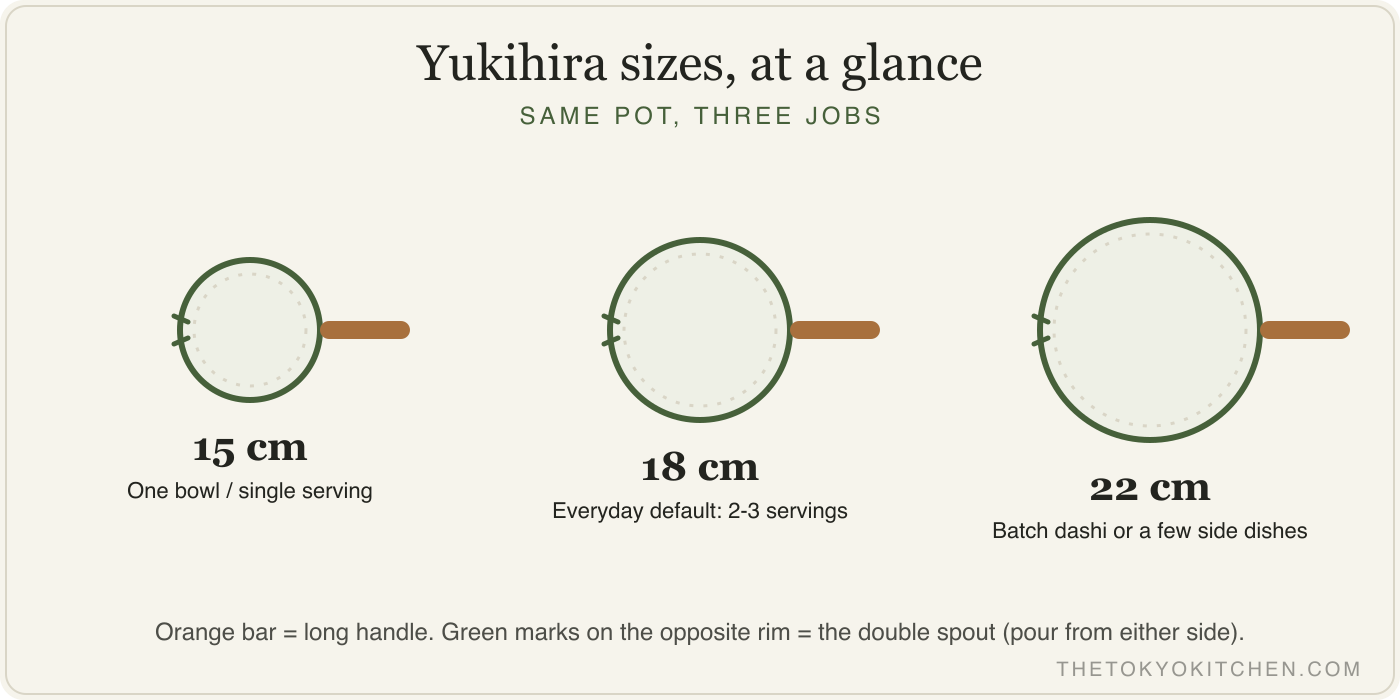
A yukihira is built around three things: one long handle, a dimpled or “hammered” (tsuchime) surface across the body, and a double spout opposite the handle. Most are aluminum, though stainless and multi-layer versions exist. Sizes typically run from about 15cm to 22cm across, and the 18cm size is the one you’ll see most often in a Japanese kitchen — big enough for a few bowls of miso soup, small enough to pull out for a single-serving task without thinking about it.
The hammered texture isn’t decorative. Hammering the metal increases the pot’s surface area without adding thickness, and more surface area in contact with the burner means heat moves into the pot — and then into whatever’s in it — faster and more evenly than a smooth-walled pot of the same weight. That’s most of the reason a yukihira heats water or miso soup almost as fast as a much heavier pot would.
Where the name comes from is genuinely unsettled. One version traces it to Ariwara no Yukihira, a Heian-era poet exiled to the coastal town of Suma, where the story goes that he had local fishermen boil seawater in pots to make salt. Another version skips the poet entirely and claims the name describes the finished salt itself — pale and granular enough to look like snow (yuki), which is where the “snow” character in 雪平 would come from. Neither story is backed by anything more solid than retellings on Japanese lifestyle and cooking sites, and I’m not going to pretend one of them is definitely right. What’s actually confirmed is less romantic: it’s the everyday pot, and in Japan nobody grows up being told which story is true, because nobody really asks.
The two spouts explain more than they seem to
A regular pot with one spout assumes you’re always going to pour from the same side. A yukihira’s double lip means you can pour from either side without rotating the pot or switching which hand is doing the pouring, and several makers advertise that exact point: pour easily whether you’re left- or right-handed. That matters more than it sounds like it should when the thing in the pot is hot dashi and the other hand is holding a ladle, a strainer, or a bowl that’s already full.
Nobody designs a $20 pot this carefully by accident. One maker, Aikata, won a 2022 Good Design Award specifically for refining this spout shape, and several sellers describe it as engineered to pour without spilling or splashing — a level of attention most cookware in any country doesn’t bother with on something this cheap.
Aluminum, and the one thing it can’t do
Aluminum is the default material for a reason: it’s light enough to lift and pour one-handed even when it’s full, it’s cheap to produce, and it conducts heat well. The tradeoff is the one most buyers run into without warning — plain aluminum doesn’t work on induction (IH) stoves, because induction heating relies on a magnetic field reacting with the metal, and aluminum on its own isn’t magnetic. A handful of listings I checked for this piece — from a maker called Himeno — say so directly: gas only, and they also warn against letting the pot boil dry, since empty aluminum over direct flame can warp or deform.
If an induction stove is what you’ve got, the pot doesn’t have to be off the table. Multi-layer versions exist specifically for this — one from the maker Koinu sandwiches aluminum between two layers of stainless steel, which keeps most of the weight and heat-conduction benefit while making the outer layer magnetic enough for an induction burner to grip onto. That extra engineering, rather than any brand name printed on the box, is the actual reason it costs more than the plain aluminum version.
What it’s actually for, day to day
This isn’t the pot for a dinner party. A donabe handles the shared nabe meal with everyone’s chopsticks in the pot.
A yukihira is the opposite scale of cooking: miso soup for one or two people, a quick dashi stock, blanching spinach for a side dish, soft-boiling an egg, reheating leftover curry without a microwave. It’s a small, fast, unglamorous job every single time, and that’s exactly why it ends up getting used more than almost anything else in the kitchen.
It’s not a pot most Japanese households research before buying. It’s the thing that’s already there, and that’s sort of the point of it.
Care, and the one mistake that ages it fast
Aluminum isn’t fragile, but it’s not indestructible either. A bare (non-coated) yukihira can develop dull gray or whitish patches over time — a mild surface oxidation that’s cosmetic, not dangerous, but that shows up faster if the pot sits wet or gets left with acidic food (tomato-based sauces, for instance) for long stretches. Dry it promptly after washing and it’ll stay looking close to new for years longer than a pot left to air-dry in a rack. Most makers also recommend hand-washing a bare aluminum yukihira rather than running it through a dishwasher, since dishwasher detergent tends to accelerate that same discoloration. Anodized or coated versions are more forgiving, which is part of why they cost more.
The actual mistake that shortens a yukihira’s life is letting it boil dry on a gas burner, even briefly. Aluminum has a relatively low melting point compared to steel or cast iron, and a pot that’s gone dry over a flame can warp at the base badly enough that it rocks on the stovetop afterward — not a dramatic failure, just a pot that no longer sits flat, which is a quiet way to ruin something that was never expensive to begin with.
What this actually costs
| Type | Example | Price | Who it’s for |
|---|---|---|---|
| Basic aluminum, Japan domestic | 18cm aluminum yukihira, standard retail | Roughly ¥1,400–¥1,800 ($9–$12) | The default choice in Japan; no frills |
| Professional-grade aluminum | Nakao Aluminum 18cm forged, gas-only | Around ¥6,280 ($41) | Thicker gauge, built for daily restaurant use |
| Imported aluminum, US retailer | Endo Shoji 18cm, IH-compatible aluminum alloy | $27.30 | A realistic first buy for US shoppers |
| Imported aluminum, larger sizes | Various 7”–9.5” aluminum yukihira | $42–$72 | Bigger batches of soup or stock |
| Stainless steel | Yoshikawa 8.6” double-lipped stainless | About $56 | Dishwasher-friendly, works on induction |
These are the figures I could verify from current listings as of November 2026; cookware pricing shifts with import duties and currency swings, so treat the dollar figures as a rough ballpark rather than something to hold a retailer to.
The honest recommendation
Don’t buy the most expensive yukihira you can find — the design doesn’t reward it the way a good knife or a cast-iron pan does. An 18cm plain aluminum one covers almost every small, everyday task a household actually needs, and it’s one of the cheapest “specialty” pots you’ll ever add to a kitchen. The one real decision is induction versus gas: if your stove is induction and you don’t already own a workaround, pay the extra for a multi-layer or stainless version instead of discovering the problem the first time you set a brand-new aluminum pot on a cold burner that refuses to heat it.
It sits in the same category as the otoshibuta that drops inside a simmering pot and the tamagoyaki pan shaped for one specific job — none of these are things anyone photographs for a kitchen tour, and all three end up used more than the pans that do get photographed.
Quick recap: a yukihira is a hammered, double-spouted, single-handled pot built for small everyday jobs, almost always aluminum unless you need induction compatibility, and it shouldn’t cost you much either way.
What’s the one pot in your own kitchen that gets used constantly but you couldn’t name if someone asked? That’s usually the gap worth filling first.
Osomatsu! (It was nothing.)
— Sen
Want the short version?
The One-Knife Kitchen: how to choose and care for the single Japanese knife that replaces the block — free, printable, one page.
Get the free guide →